Basic Types
int
A 64-bit two’s complement signed integer. It represents whole numbers from -9223372036854775808 to 9223372036854775807.
let x = 3
let y = -42
let z = 1048576

bool
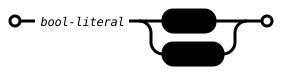
A boolean. true and false are literal bool values.
let is_cool = true
string
A UTF-8 encoded string with no internal null bytes.
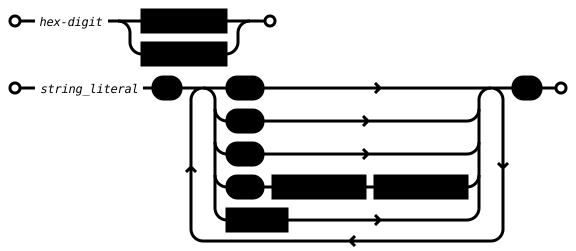
Literal string values are surrounded by double-quotes ("). String
literals support escapes for \n, \", \\, and two-digit hex escapes
\xNN.
let s = "Hello my name is \"Fred\""
let t = "Control Characters:\n STX \x01 BEL \x07"
//let u = "Null-terminated\x00"  // internal null byte not allowed!
bytes
Bytes represents an arbitrary byte sequence. It is similar to a
string, but it provides no validation for its contents, nor any way to
specify a literal. The id type below is similar, but fixed-length and
should be preferred specifically for identifier types.
id
An opaque type for object identifiers. It is not possible to specify
literal ids.